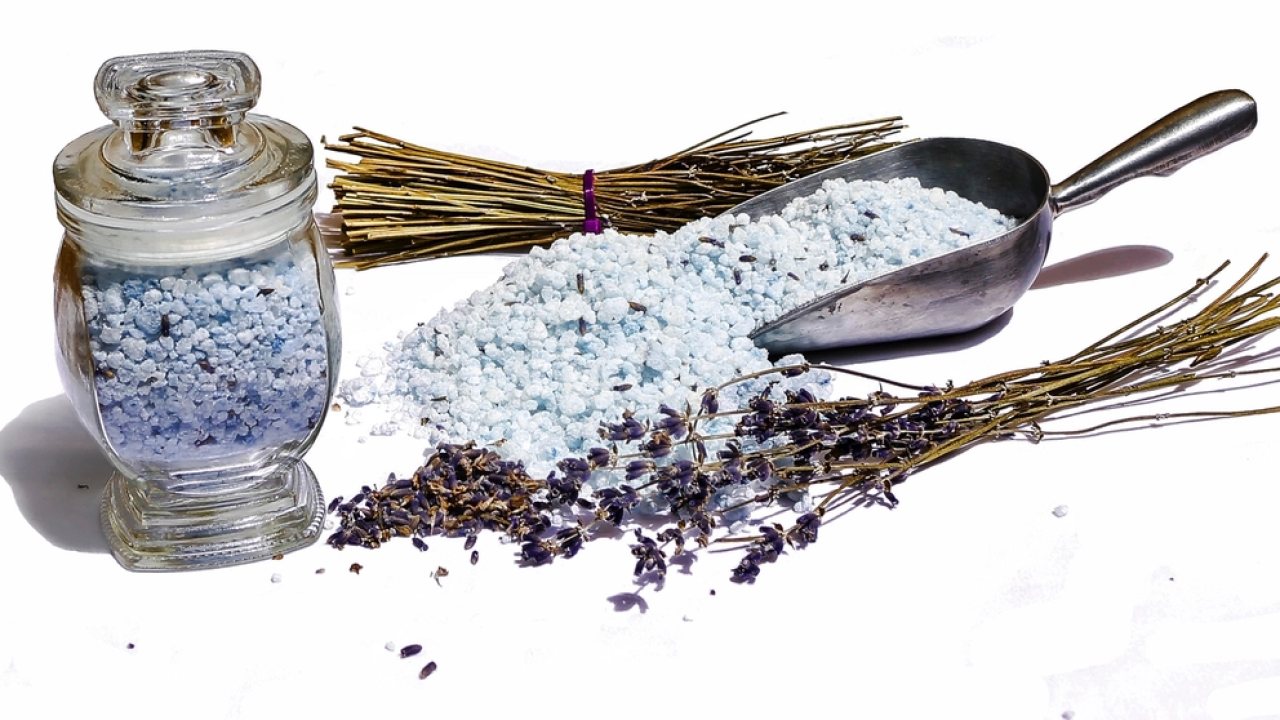
My first bath salts were lavender, in tall glass jars with cork lids, photographed against a white bathtub in a friend's flat in Gurugram. They looked like something from a magazine. In three weeks I sold four jars, three of them to relatives, and I still have the photograph of that tub.
The short version
- A bath salt business in India does not sell bathtubs. It sells foot soaks to parlours, favours to weddings, gifts at Diwali, and salts with an intention, cleansing, nazar, sleep, to people who buy them by name.
- A 250 g jar costs ₹80–₹90 to make and pack honestly, and sells at ₹349. A kilo of foot-soak salt costs about ₹120 and goes to a parlour at ₹250–₹300.
- Salt is its own preservative. Twelve months is a fair best-before if the jar stays dry.
- Start with four salts, not eight, and one pack size for each buyer.
- It is a cosmetic in law, so read the licence section before you print a label.
Most bath salt advice on the internet is written for countries where people lie in a tub on a Sunday. Almost nobody in Faridabad does. We take bucket baths and showers, and a 250 g jar of Epsom salt that needs a full tub to dissolve in is, for most of my customers, a nice-smelling ornament.
The business exists anyway, because the product has four other uses that Indian customers already pay for. Once I stopped photographing bathtubs and started photographing feet, the jars moved.
The customerWho buys bath salts in a country without bathtubs
Parlours, for the pedicure
Every pedicure starts with feet in a basin of warm water, and the good parlours put a scoop of scented salt in it. That scoop is 40–60 g. A busy Faridabad parlour does fifteen to thirty pedicures a week and buys plain scented salt by the kilo at ₹220–₹380 from a distributor. This is the volume buyer, and the first door to knock on.
Weddings and Diwali, for the favour
A 100 g pouch with a tag, in an order of 50–200, at ₹120–₹180 each. The bride's mother wants something that is not another box of dry fruit, and a pouch of rose salt with the couple's names on the tag is that. October to February is this buyer's whole year.
The intention buyer
Cleansing salt, nazar salt, money salt, sleep salt. I was uncomfortable with this at first. Then I watched who bought them: the same people who hang a nimbu-mirchi on a new car and would never call themselves superstitious. It is a gift with a meaning attached, packed and labelled as a bath salt. The course teaches the ritual method for these, and I now make more of them than I do lavender.
The shower and bucket user
A handful in the bucket, or rubbed on wet skin as a scrub. This is the online retail customer, one jar at a time, and the smallest of the four. Do not build the business on her.
The eightEight salts, and the four I would launch with
The course covers eight: relaxing, cleansing, love, money, evil eye, magic, sound sleep and healing. Launch with four.
- Relaxing, lavender and Epsom, is the one everybody recognises and the base for the foot soak.
- Cleansing, with sea salt and a sharper oil, is the gift for a new home or a new job.
- Evil eye, the nazar salt, is the one relatives buy in threes.
- Sound sleep sells to the mother of a small child and to anyone over fifty.
Love, money, magic and healing come in once the first four are moving. Each new salt is a new label, a new oil and a new shelf of stock that has to sell before it fades.
The materialsWhat goes in, and what it costs by the kilo
| Material | 1 kg retail | At 5 kg and up, per kg |
|---|---|---|
| Epsom salt (magnesium sulphate) | ₹90–₹140 | ₹45–₹70 |
| Himalayan pink salt, coarse | ₹80–₹140 | ₹50–₹80 |
| Sea salt, coarse | ₹30–₹60 | ₹20–₹35 |
| Baking soda | ₹60–₹90 | ₹40–₹55 |
| Dried rose petals | ₹350–₹700 | ₹250–₹450 |
| Lavender essential oil, per 15 ml | ₹280–₹550 | ₹180–₹350 |
Salt is cheap. The oil and the jar are not. A 250 g jar that carries ₹18 of salt carries ₹32 of glass and label and ₹14 of oil, which is why the pack size and the container are pricing decisions, not decoration. The full material list is in the second lesson of the course, or you can take the BathSalt Shala DIY kit from the store and skip the sourcing for the first batch.
Fragrance oils sold for candles and diffusers are not for skin. Buy essential oils or fragrance oils labelled for cosmetic use, and colour with cosmetic mica or a food-grade colour, never a holi colour or a fabric dye. A foot soak that stains a parlour's basin ends the relationship the same afternoon.
The methodHow a 5 kg batch is made
- Dry everythingBowl, spoon, sieve, jars, and the day. A batch mixed in the monsoon with the cooler on clumps in the jar within a fortnight.
- Weigh the saltsEpsom, pink or sea salt, and soda in the course's proportions, on a scale. Sieve out the fine dust; it is what cakes at the bottom of the jar.
- Carry the oil in a cup of salt firstDrop the oil onto a cup of salt, rub it through until no wet spots remain, then blend that into the rest. Oil straight into 5 kg gives you three scented handfuls and a bland batch.
- Colour and restMica or colour goes in the same way. Then the whole batch rests overnight in a closed container so the scent evens out.
- Botanicals last, and lightlyPetals and buds by the pinch, on top, not stirred through. They are for the eye, they fade first, and they clog a parlour's drain if you overdo the foot soak.
- Fill by weight, wipe, seal, label250 g on the scale, wipe the rim, silica sachet under the lid, and the label with a batch number and the month.
The jar did not sell because it needed a bathtub. The same salt in a kilo pouch marked foot soak sold to a parlour the first afternoon. — the photograph of the borrowed tub, and what it cost me
The numbersWhat a bath salt business earns per jar
| Item | Per jar |
|---|---|
| Epsom, pink salt and soda, 250 g | ₹18 |
| Essential oil, about 1.5 ml | ₹14 |
| Dried rose and lavender, 5 g | ₹6 |
| Glass jar, lid, printed label | ₹32 |
| Silica sachet | ₹1 |
| My time: 1 hour for 20 jars, at ₹150 an hour | ₹8 |
| Wastage, 5% | ₹3 |
| Electricity, courier share, the odd broken jar | ₹5 |
| True cost per jar | ₹87 |
At ₹87, the retail price at 4× is ₹349 and the wholesale floor for a gift shop is ₹174. The kilo pouch for parlours costs about ₹120 and goes at ₹250–₹300, which is a thinner multiple but a far bigger order. The 100 g favour pouch costs about ₹35 with tag and ribbon and goes at ₹120–₹180 in orders of fifty or more. The costing method behind all three is one article, and it is the one I would read first.
Selling itParlours, favours and the festive window
The parlour is the first call. Walk in with a kilo pouch of foot-soak salt and a small basin, offer to put a scoop in the next client's water, and leave the pouch. The pedicure client asks what smells so good, the owner reads the label, and the reorder is 3 kg a month at ₹250–₹300. Meenu's article on selling to salons and parlours has the minimum-order and credit conversations written out.
Favours come through the parlour, oddly. The bride is in the chair for a month before the wedding and her mother is sitting beside her. A tent card by the basin, 100 g favours from ₹120, your number, does the rest. Orders of fifty to two hundred come with three weeks' notice and a deposit, and you should ask for both.
Diwali is the third window, and the festive calendar sets out when to have stock made. A set of three 100 g pouches in a kraft box at ₹449 is the product; make it in September, not October.
A 1 kg pouch for the parlour, a 100 g pouch for favours, a 250 g jar for retail and gifting. Three sizes, not eight. Every extra size is another jar to stock, another label to print and another line on the price list nobody reads.
The rulesLabels, licence and the monsoon
Bath salts are cosmetics under the Drugs and Cosmetics Act. As of 2026, manufacturing cosmetics for sale in India needs a licence from the state licensing authority, and a home kitchen does not meet the premises conditions. Every pack also carries the Legal Metrology declarations: name, net weight, MRP inclusive of taxes, your name and address, month and year of packing, contact, plus batch number and ingredients. I have written the rules and the options for a home brand in one place; read it, and verify the current wording on the official portals.
Shelf life is the good news. Salt is its own preservative, and there is no water to spoil. Twelve months is a fair best-before. The two things that shorten it are humidity, which clumps a jar in August, and botanicals, which fade and lose scent after six to eight months. Pack on a dry day, silica under the lid, and keep the petals to a pinch. Shelf life across handmade products is a separate article.
Avoid theseWhere a bath salt business goes wrong
The bathtub photograph
Mine. Photograph feet in a basin, a hand in a bucket, a pouch on a wedding table. Show the use your customer actually has.
Real lavender, priced like sea salt
A 15 ml bottle of real lavender oil is ₹280–₹550 and scents about ten jars. If the jar is priced at ₹149 the oil alone has eaten the margin. Either charge for it or use a cosmetic-grade fragrance oil and say so on the label.
Eight salts in week one
Eight labels, eight oils, eight jars of stock, four of which sit. Four salts, three sizes.
A jar that is not airtight
The cork lid that looked so good in the photograph let the monsoon in. Screw lids with a liner, or heat-sealed pouches, and nothing else.
Selling only online
One jar at a time, ₹79 in courier, a broken jar every tenth order. The parlour buys 3 kg and you deliver it on a scooter.
What nextThe first 5 kg
Make relaxing salt, 5 kg, this week. Pack one kilo pouch for a parlour, ten 100 g favours, and ten 250 g jars. That is one batch, one afternoon and about ₹1,350 in materials and packaging, and it puts one product in front of all four buyers at once. Whichever buyer answers first tells you what business you are in.
The BathSalt Shala course has all eight salts filmed start to finish, the full material list, a PDF recipe sheet and the packing and pricing lessons, in Hindi and English. Nothing in it needs more than a bowl, a spoon and a sieve from the kitchen you already have.
Still unsureQuestions we get asked
Is a bath salt business profitable in India when most homes have no bathtub?
What do I need to start making bath salts at home?
How long do homemade bath salts last?
What do parlours pay for foot-soak salt?
Do I need a licence to sell bath salts in India?
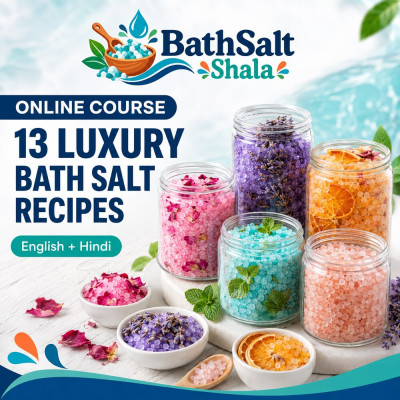
BathSalt Shala — Luxury Bath Salt Business Course
Make 13 luxury, spa-style bath salts at home — Relaxation, Anti-Stress, Muscle-Soothing, Cooling Peppermint, Romantic…
Anju Mittal
Anju formulates the soap, shampoo, hair oil, face pack, perfume and bath-salt recipes GyaanShala teaches — and sold every one of them from home first, spoiled batches included. She writes the pieces about what goes in the jar, what keeps, and what a salon actually orders.
0 comments
Log in to ask a question or share what happened when you tried this.