The first hanging perfume I made for my own car was empty in five days. It was May in Faridabad, the car sat in the sun outside the unit, and I had tipped the bottle to wet the wooden cap the way the seller's video showed. By Friday the cap had drunk everything. A car perfume business is the cheapest fragrance product you can start and the one most punished by heat, and nobody had mentioned the heat.
The short version
- A hanging car perfume is a 5–10 ml glass bottle with a wooden cap, holding fragrance compound in an alcohol base. The cap does the work.
- The alcohol-to-fragrance ratio decides whether it lasts one week or six. Start at 30% fragrance and test in a parked car, not a cupboard.
- A hanging perfume costs ₹60–₹70 to make and sells at ₹149–₹249, or ₹90–₹110 to shops. A 100 ml reed diffuser costs about ₹400 and sells at ₹799–₹999.
- Car accessory shops, cab operators and Diwali corporate orders buy in dozens. Households buy diffusers; drivers buy hanging bottles.
- Neither product touches skin, so the paperwork is packaged-goods labelling, not a cosmetics licence.
I added car perfumes and diffusers to my range after the roll-on attars, and for a reason that had nothing to do with fragrance. Every customer who bought a roll-on from me had a car, and every car in Faridabad has something hanging from the mirror. It was a product my existing customers were already buying from a petrol pump counter for ₹120.
It turned out to be a different craft from attar. A roll-on is judged at the wrist over six hours. A car perfume is judged over six weeks, through two heatwaves and a monsoon, by a person who will not tip the bottle when you tell them to. Formulating for that is mostly about the ratio and the base, and the course is built around exactly that.
Here is what the products are, what breaks, what they cost and who reorders.
Why it sellsWhy a car perfume business is a good first fragrance product
The raw material cost is the lowest of any product I make. A 30-piece batch of hanging perfumes uses ₹750 of fragrance compound and ₹60 of alcohol. The bottle costs more than the liquid inside it. That means your risk on a first batch is under ₹2,500 and you can learn on it without losing sleep.
It is also a product people replace on a schedule. A hanging bottle is finished in four to six weeks, and a driver who liked the smell buys the same one again, often from the same shop. A reed diffuser in a living room is finished in two months and the same house buys the next one for the next season. Repeat purchase is built into the format; you do not have to remind anyone.
And it has two distinct customers at two price points. Drivers and cab operators buy hanging bottles at ₹149–₹249 by the dozen. Households and offices buy diffusers at ₹799–₹999 as gifts and as room fragrance. Same base, same compounds, one shelf.
Where it goes wrongWhere a car perfume business fails: heat, ratio and the leaking cork
The dashboard of a closed car in a Haryana summer passes 60°C. Alcohol evaporates fast at that temperature, and a bottle that would last six weeks in Bengaluru lasts twelve days in Faridabad in June. You cannot change the weather, but you can change the ratio, the cap and the instructions.
The second failure is a ratio chosen to save money. At 15% fragrance the bottle smells fine on the day it is opened and is a bottle of faintly scented alcohol within a week. Every fragrance behaves differently: lemon zest is all top notes and fades fastest; champa and mogra are heavy florals and hold; brut is a classic aromatic with a fixative base and lasts longest of the ones I make. Each one has its own number.
The third is the seal. A hanging bottle is closed with a wooden cap over a cork or plastic stopper, and a cheap stopper weeps. The customer lays the bottle in the door pocket, the liquid finds the gap, and the perfume ends up on the seat. Cars in India are full of stained seats from ₹80 mirror hangers, and your ₹199 one must not join them.
Hang one bottle from every batch in your own car for a month and write down the week it faded. A cupboard test at 28°C tells you nothing about a dashboard at 60°C. My ratios changed twice in the first summer.
What goes inThe base, the compounds and the ratio
The hanging perfume
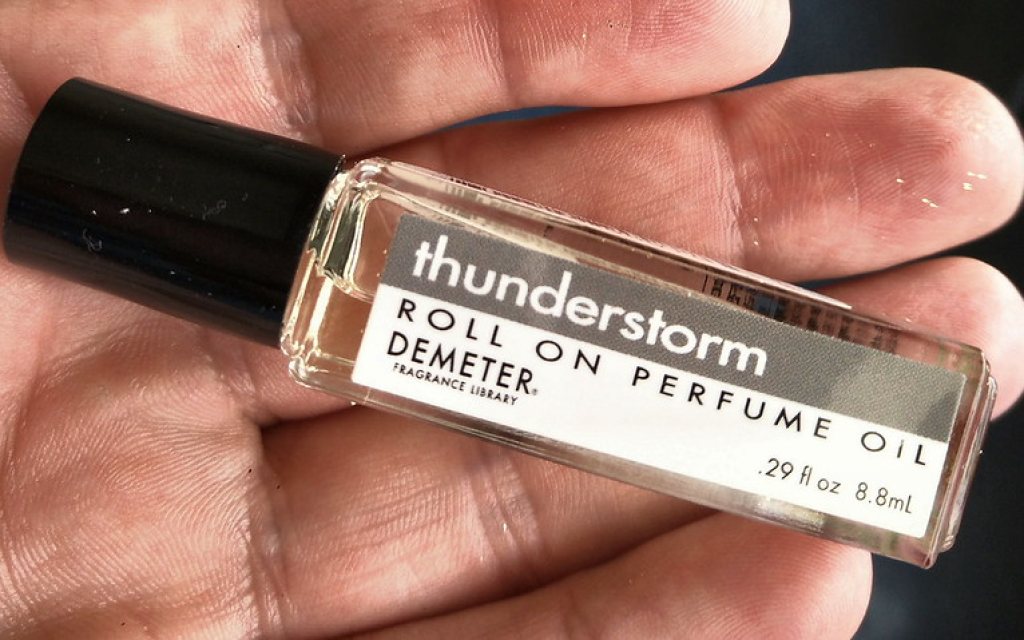
Three ingredients. The alcohol base, ₹150–₹300 a litre from a chemical supplier, is the carrier; it travels into the wooden cap and evaporates from it, carrying the fragrance with it. The fragrance compound, ₹700–₹1,500 per 100 ml, is the scent. A small share of a fixative, or a compound that already has a fixative base, slows the whole thing down.
The alcohol-to-fragrance ratio is the lesson everything depends on. I run between 25% and 40% fragrance depending on the note, and the course goes through the exact number for each of the six fragrances it films: brut, champa, mogra, lemon zest, and a lavender and rose combination. That combination lesson is the most useful one, because it shows how two compounds are balanced against each other, not just against the alcohol.
The reed diffuser
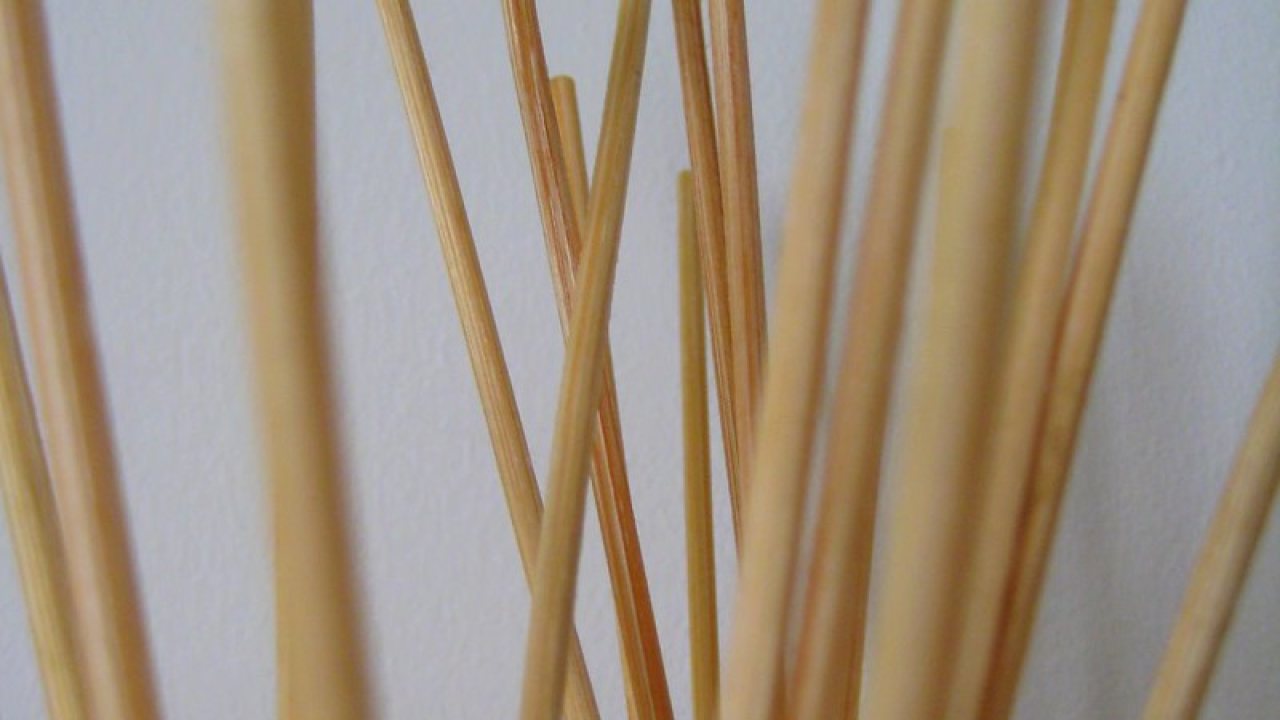
A diffuser uses a different base. A reed diffuser base, ₹350–₹600 a litre, is a low-odour solvent that wicks up a reed and evaporates slowly from it; alcohol would be gone in a week. Fragrance at 20–25%. Fibre reeds, ₹2–₹4 each, throw scent far better than rattan and do not clog as fast. A 100 ml bottle with eight reeds fills a closed bedroom for six to ten weeks.
Both bases, the compounds, the bottles, caps and reeds are stocked in small quantities at the GyaanShala store, and my supplier notes for all of them are in where to buy raw materials.
The methodA batch of thirty hanging perfumes
- Choose one fragrance and buy 100 mlNot six. One compound, tested at three ratios in three bottles hung in your car for a fortnight. The number you land on is your formula for that fragrance.
- Measure the alcohol into a glass beakerFor thirty 8 ml bottles at 30%, that is 168 ml of alcohol base. Glass, not plastic; some compounds soften plastic.
- Add the compound and stir72 ml, slowly, with a glass rod. If it hazes, the compound has an oil-heavy base and needs a percentage point of solubiliser, which the ingredients lesson covers.
- Rest it overnightCapped, in the dark. A blend that has rested smells rounder and tests truer.
- Fill to 7 ml, not 8Air space stops the stopper being pushed out in heat. A 10 ml syringe fills thirty bottles in twenty minutes.
- Stopper, cap, cord, shrink bandPress the stopper fully home, screw the wooden cap, thread the cord, and shrink a band over the cap. The band is the difference between a bottle that survives the courier and one that does not.
- Tag it with instructionsA small card on the cord: tip once to wet the cap, then hang; do not lay it flat; re-tip after two weeks. Half your lifespan complaints disappear with this card.
A diffuser batch follows the same order with the diffuser base, filled to 90 ml in a 100 ml bottle, reeds bundled separately so they do not arrive pre-soaked and half spent.
CostsWhat a hanging perfume and a diffuser cost to make
| Item | Hanging, 8 ml | Diffuser, 100 ml |
|---|---|---|
| Fragrance compound | ₹24 | ₹220 |
| Base (alcohol or diffuser base) | ₹2 | ₹39 |
| Glass bottle, cap, stopper, cord or reeds | ₹22 | ₹79 |
| Label, tag, shrink band | ₹6 | ₹8 |
| Box | ₹0 | ₹35 |
| Wastage and testers | ₹3 | ₹6 |
| My time at ₹150 an hour | ₹8 | ₹15 |
| Cost per piece | ₹65 | ₹402 |
The hanging perfume sells at ₹199 retail and ₹100 to a shop that takes twenty. The diffuser sells at ₹899 to a household and ₹650 on a corporate order of fifty. Notice that the box is nothing on the hanging bottle and ₹35 on the diffuser; a diffuser is a gift and the box is part of the product, and Meenu's packaging guide has the box suppliers.
Your first outlay is about ₹3,500 for the hanging line and another ₹3,000 if you add diffusers in month two. Price both from your own cost sheet, not from mine; the method is in how to price your handmade products.
The shop does not reorder because the perfume smells good. It reorders because the customer came back and asked for the same one. — the owner of the first accessories shop that stocked me
SellingAccessory shops, cab operators and the Diwali order
Hanging perfumes sell through shops, not through Instagram. A car accessories shop near a service centre sells ten to thirty hangers a week and keeps a margin of ₹80–₹100 on each. Take a tray of six fragrances, leave twelve pieces on consignment for a fortnight, and come back. Two out of five shops reorder; that is a good rate. The wholesale conversation is the same as the one Meenu describes in selling to salons and parlours, with a different counter.
Cab and taxi operators are the quiet large customer. An operator with fifteen cars buys fifteen a month, every month, at ₹100 a piece, and cares about one thing: that the smell is not sweet. Brut and lemon zest go to fleets; mogra and champa go to private cars.
Diffusers sell to households through WhatsApp and to offices through Diwali and year-end gifting, where a ₹650 diffuser in a box with a card is a standard corporate gift and an order is fifty or a hundred pieces. The timing is in the festive calendar; start pitching offices in September.
"Do you have one that is not sweet?" "How long will it last in the sun?" "Can I have the same one as last time?" Keep a plain, dry fragrance in the range for the first question, an honest number for the second, and a batch book for the third.
MistakesSix I made in the first year
- Launching six fragrances at once. Three sold. Three expired on the shelf. Start with brut, mogra and one citrus.
- Filling to the brim. Half a batch pushed its stoppers out in a courier van in June.
- Rattan reeds. They clogged in three weeks and customers thought the diffuser had died. Fibre reeds, and a card that says flip them weekly.
- Plastic bottles for the hanger. Lighter and cheaper, and they looked like the ₹80 ones. Glass is worth the ₹8.
- Selling to shops on credit. Consignment for the first fortnight, then cash on delivery. Never a running account with a shop you cannot visit.
- No batch number on the tag. A shop asked for "the one from before" and I could not tell which ratio it had been.
What nextLabels, and the product that follows
Because neither product goes on skin, they are not cosmetics; they are packaged goods. The label needs your name and address, the net quantity, the MRP, the month and year of packing and a customer care contact. As of 2026, verify the current requirements under the Legal Metrology rules on the Department of Consumer Affairs portal before you print a thousand tags.
If you have not made a roll-on attar yet, that is the sister product: the same compounds in an oil base, sold to the same customer for her wrist rather than her mirror. It is covered in how to make attar and roll-on perfume at home.
The Hanging Perfume Shala course films the ingredients and the base, then each of the fragrances start to finish, with the bottle guide, packaging for gifting and pricing, in Hindi and English. Buy one compound, make thirty bottles, hang three in your own car, and go and talk to one accessories shop.
Still unsureQuestions we get asked
What is a hanging car perfume made of?
How long does a hanging car perfume last?
What goes into a reed diffuser?
How much does it cost to start a car perfume business at home?
Do I need a licence to sell car perfumes and reed diffusers in India?
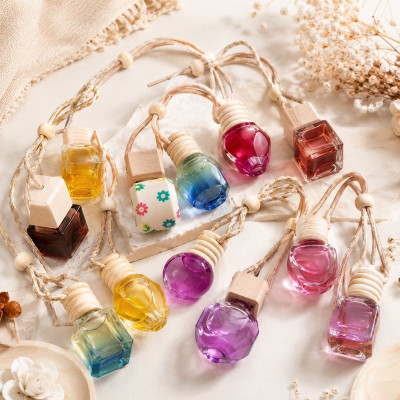
Hanging Perfume Shala — Car Perfumes & Home Diffusers Business Course
Learn to make hanging car perfumes and home diffusers at home. Six complete fragrances are filmed start to finish…
Anju Mittal
Anju formulates the soap, shampoo, hair oil, face pack, perfume and bath-salt recipes GyaanShala teaches — and sold every one of them from home first, spoiled batches included. She writes the pieces about what goes in the jar, what keeps, and what a salon actually orders.
0 comments
Log in to ask a question or share what happened when you tried this.