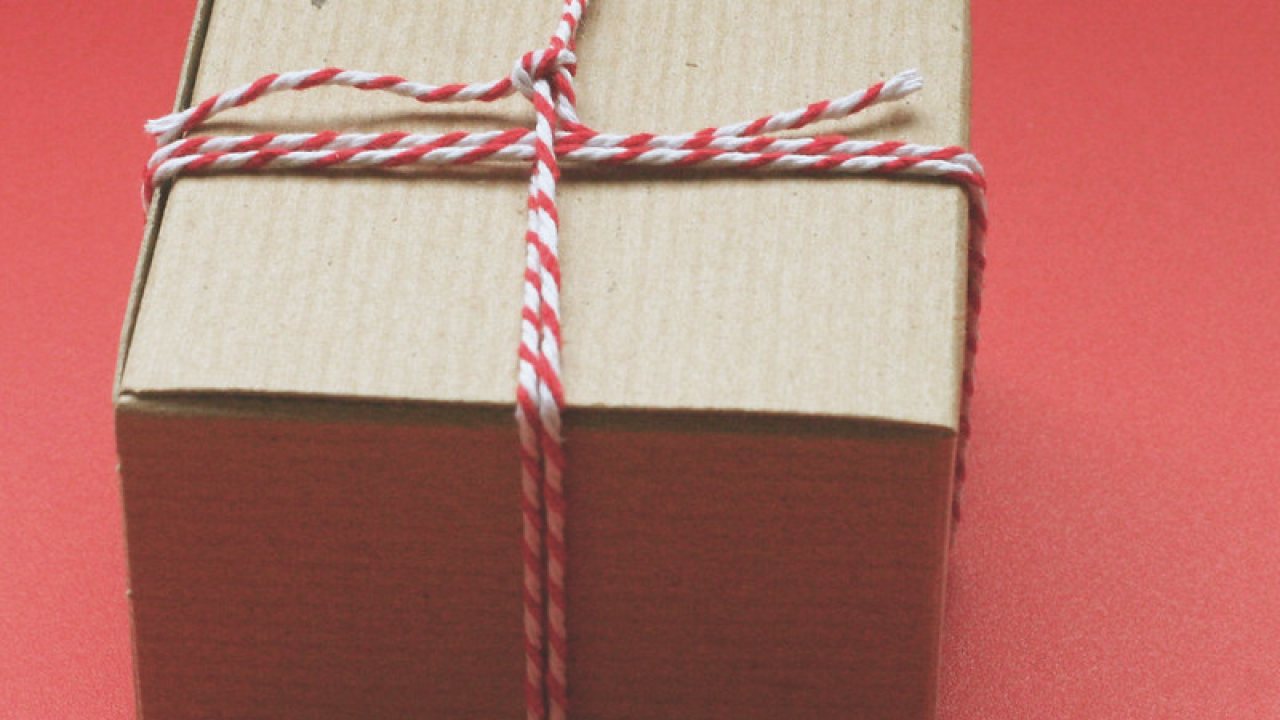
Two Diwalis ago I put the same haldi-chandan soap on the same table twice. In a clear sleeve with a hand-written sticker it was priced at ₹80, and every second person asked for a discount. In a brown kraft box with a printed band and a loop of jute twine it was ₹249, and nobody asked. Same bar, same batch, same Sunday.
The short version
- Customers price packaging for handmade products before they try what is inside. The outside decides whether it is a ₹60 bar or a ₹249 bar.
- Done sensibly, packaging for a soap or a chocolate bar costs ₹18–₹32 per piece including the courier box. It is a material like any other, so cost it like one.
- Buy 100 pieces of one box size, not 1,000 of five sizes. Print your labels; never write them.
- Two colours, one font, one box. Consistency is what reads as "a brand".
- Packaging cannot fix a product that sweats, melts or leaks. Solve that first.
I make chocolates, cakes and hampers, and I have packed more festive orders than I can count. The question I get most from women starting out is not about recipes. It is "why does mine look homemade and hers look bought?" The answer is rarely the product. It is the sleeve, the sticker, the tape and the box it arrived in.
The word "homemade" does something odd in India. On a plate of laddoos it is a compliment. On a product with a price tag it quietly knocks ₹100 off what the buyer is willing to pay. Packaging has one job: to stop that word forming in the buyer's head before they have opened anything.
This is not about spending more. Most of the packaging that looks expensive is cheap. What it needs is a decision made once and repeated every time.
Where it goes wrongFive things that make packaging for handmade products look homemade
Walk around any exhibition stall or scroll any WhatsApp catalogue and the same five signals appear. Each one is fixable for under ₹5 a piece.
- Cling film or a plain polythene sleeve. It reflects light, it crinkles, and on a phone photo it looks like leftovers.
- A hand-written label. However neat the handwriting, it says "one person in a kitchen". A printed 5 cm sticker costs about ₹1.
- Mismatched containers. Three sizes of jar because that is what was in the cupboard. The buyer reads it as "she does not have a product, she has leftovers".
- Brown tape and a newspaper wrap. The courier box is part of the packaging. It is the first thing the customer touches.
- Too much decoration. Glitter, curled ribbon, five colours. Expensive brands are quiet. Cheap ones shout.
What it really costsPackaging for handmade products, priced per piece
This is the table I wish somebody had given me. Prices are what I paid in 2026 buying from Sadar Bazaar in Delhi and from online packaging sellers, at the quantities a home business actually buys. Yours will differ by city; the categories will not.
| Item | At 100 pcs | At 1,000 pcs |
|---|---|---|
| Kraft tuck box, 9 × 6 × 3 cm | ₹7–₹12 | ₹3.50–₹5 |
| Printed label, 5 × 5 cm, colour | ₹1.50–₹3 | ₹0.60–₹1 |
| Butter paper or tissue inner wrap | ₹0.50–₹1 | ₹0.30–₹0.50 |
| Jute twine or satin ribbon, 40 cm | ₹0.80–₹1.50 | ₹0.50–₹0.80 |
| Thank-you card, printed | ₹1–₹2 | ₹0.40–₹0.80 |
| Bubble wrap, one turn | ₹1.50–₹3 | ₹1–₹2 |
| Corrugated courier box, 3-ply, 10 × 10 × 5 cm | ₹5–₹8 | ₹3–₹5 |
| Paper tape and a shipping label | ₹1–₹1.50 | ₹0.70–₹1 |
| Packaging per piece | ₹18–₹32 | ₹10–₹16 |
Read the totals against the product. A melt-and-pour bar costs ₹55–₹70 to make once you count your time and wastage, which Anju's pricing article walks through line by line. Add ₹25 of packaging and you are at ₹85–₹95 landed. Sell at ₹249 and you keep more than 60 percent. Sell the same bar in a sleeve at ₹80 and you are working for free.
The right-hand column is a trap for beginners. Yes, the box is half the price at 1,000 pieces. But 1,000 boxes is ₹4,000 sitting in a cupboard, and if you change your bar size in month three, it is ₹4,000 in the bin. Buy 100. Sell them. Then buy 500.
Pick one box size that fits your largest product and use it for everything. A 9 × 6 × 3 cm tuck box holds a 100 g soap, an 80 g chocolate bar, a 50 g face pack jar and a 10 ml roll-on. One size of box, one supplier, one reorder. The label does the work of telling them apart.
The methodFive layers, and which ones the customer sees
Every packed product has the same five layers.
1. The inner wrap
Whatever touches the product. Butter paper for soap and chocolate, a food-grade pouch for masala, a glass or PET jar for anything wet. This layer is about protection, not looks. Soap must breathe: a bar sealed in plastic sweats in Faridabad humidity and arrives slimy. Chocolate must stay dry and cool or it blooms white.
2. The box or jar
The layer that sets the price in the buyer's head. Plain kraft is the safest choice: it photographs well, it hides fingerprints, and it suits soap, chocolate, masala and candles equally. White boxes look cleaner but show every mark.
3. The label
The only layer that carries information, and the only one the law cares about. More on it below.
4. The tie and the insert
Twine, ribbon, a paper band, a card. This is where "handmade" becomes a feature instead of an apology. One loop of jute twine on a kraft box does more than ₹10 of ribbon. A printed card that says what the product is and how to use it turns a gift into a story the giver can repeat.
5. The shipper
The courier box, the bubble wrap, the tape. A crushed carton with three layers of brown tape undoes everything inside it. Paper tape costs ₹40–₹60 a roll and looks ten times better than the plastic kind.
The customer decides what your product is worth in the four seconds between the parcel opening and the box coming out. Everything you spent on the recipe is judged in those four seconds. — what I tell every batch of hamper students
The labelWhat must be on it, and what makes it look bought
A label has two jobs. It has to satisfy the rules, and it has to look like a company made it. The first part is not optional once you sell to strangers.
For a packaged food or cosmetic sold in India, the Legal Metrology packaged-commodity rules expect the product name, net quantity, MRP inclusive of taxes, the name and address of the maker, the month and year of packing, and a customer-care phone number or email. Cosmetics add an ingredients list, a batch number and a best-before date; food adds the FSSAI licence number and the veg or non-veg mark. As of 2026, verify the current wording on the Department of Consumer Affairs portal before you print 500 stickers; the rules change and the fines are real.
Anju has written the cosmetics side up properly in the labelling rules for home brands, and Rahul covers food in the FSSAI piece.
Now the second job. What makes a label look printed by a company rather than a person is not the logo. It is restraint.
- Two colours. One dark for text, one accent. The kraft brown counts as a third.
- One typeface. Two at most: one for the name, one for everything else. Free fonts are fine.
- The product name larger than your brand name. The buyer wants to know what it is before who made it.
- Empty space. If the sticker is full, it looks like a notice board.
- A batch number, always. Nothing says "real business" like a batch code, and you will need it the day a customer asks which bar gave her a rash.
A local digital printer will do A4 sheets of 20 stickers on matte vinyl or textured paper for ₹25–₹45 a sheet. That is ₹1.25–₹2.25 per label at a quantity of 100. Do not laminate; glossy lamination on kraft looks cheap.
The stepsFrom kitchen table to "where did you buy this?"
- Fix the product's own problem firstSweating soap, blooming chocolate, a leaking jar. No box hides it. Anju's shelf-life article is the checklist.
- Choose one box, one jar, one pouchMeasure your largest product, add 5 mm each side, and buy 100 of that size. Everything smaller goes in the same box with a little tissue.
- Pick two colours and one font, and write them downOn a card stuck inside your cupboard door. Every sticker, card and Instagram post uses them from now on.
- Design a label with the legal fields firstLay out the compulsory text at a readable size, then fit the name and the accent around it. Print one sheet, stick it on a box, photograph it, and only then print twenty sheets.
- Pack ten and photograph themLine them up in window light. If they do not look like they came from one company, change the one thing that breaks the row. Rahul's phone photography guide covers the shot.
- Write the packaging cost into your priceAdd the per-piece total from the table to your product cost before you set a selling price. Packaging you forgot to cost is packaging the customer got free.
SourcingWhere the boxes actually come from
Every city has a packaging lane. In Delhi it is Sadar Bazaar for boxes, ribbon and tissue, and Chawri Bazar for paper and cards. A morning there with ₹1,500 in your bag gets a home business set up for its first 100 orders. Ask for "tuck box kraft" or "drawer box" and give the inside dimensions in centimetres; they think in inches, so carry both.
If you cannot travel, the same items are on Amazon and on the wholesale sites at roughly 20–40 percent more, delivered. Anju lists the suppliers she uses in where to buy raw materials.
For hampers and gift sets, we put together the gift hamper packaging bundle in our store because students kept buying the wrong sizes of base, filler and wrap. It is the set I use for the hampers in the course, and it saves the three trips I made in my first year.
The shiny transparent sheet sold as gift wrap traps moisture. Soap sealed in it sweats within a week in monsoon; chocolate fogs and blooms. Use it on the outside of a hamper for the look, never as the layer that touches the product. Butter paper inside, cellophane outside.
MistakesWhere the money leaks
Packaging that costs more than the product. A ₹35 rigid box around a ₹30 chocolate bar does not make it a ₹300 bar. It makes it a bar that loses money at ₹149. The total in the table above is the ceiling for a single-piece product.
A different box for every product. Five kinds of packaging means five reorders, five minimums and a cupboard full of near-empty stacks. One box, many labels.
Ribbon in five colours. Buy one 50 m roll of one colour. It costs ₹90–₹140 and lasts 120 orders.
No batch number, no date. It is a legal requirement for cosmetics and food, and it is also what makes the label look real. A rubber date stamp is ₹150.
Decorating instead of packing. Dried flowers glued on the lid arrive as crumbs. Anything that can fall off in a courier bag, will.
What nextFrom one bar to a box of three
Once a single product looks bought, the fastest way to raise the order value is to put three of them in one box. A trio of soaps in a kraft tray with a paper band sells at ₹649 where three loose bars sell at ₹249 each and are bargained down. The packaging for the set costs ₹40–₹60, and the buyer is now buying a gift, which is a different conversation.
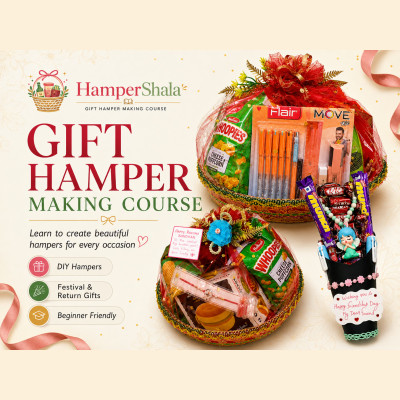
That is the whole logic of hampers, and it is what I teach in the Gift Hamper Shala course: five complete hampers filmed start to finish, RakshaBandhan, bouquet, choco and nuts, beauty and money, with the base, the filler, the wrap and the presentation of each. When you are ready for festive orders, the festive blueprint is where to go next.
Still unsureQuestions we get asked
How much does packaging cost per piece for handmade soap or chocolate?
What is the cheapest packaging that still looks premium?
What must a label on a handmade product show in India?
Can I wrap handmade soap in cellophane or plastic?
Where do I buy kraft boxes and packaging in small quantities?
Gift Hamper Shala - Making Course
Learn to create beautiful gift hampers for every occasion — and turn it into a business. Hindi + English · Lifetime…
Meenu Aggarwal
Meenu ran the chocolate, cake, masala and gift-hamper side of the family business and has assembled more Diwali orders than she can count. She writes about kitchens, packaging, festive timing and the products customers reorder.
0 comments
Log in to ask a question or share what happened when you tried this.