The first question my sister Meenu hears from anyone who wants to sell masalas is not about the recipe. It is "do I need FSSAI?" The answer is yes, and it is less work than the fear suggests. I have walked enough people through FSSAI registration for home business that I can tell you exactly where they get stuck, and it is never the form.
The short version
- If you sell food, including on WhatsApp, you need to be registered or licensed with FSSAI before the first sale. Cosmetics are a different law; this article is only about food.
- A home kitchen almost always starts with Basic Registration. The State Licence is for bigger turnover or specific categories.
- Everything happens on the FoSCoS portal. You do not need an agent, and the fee is small.
- You get a 14-digit number. It goes on every label with the FSSAI logo, and customers can check it online.
- Rules change. Everything here is as of 2026; verify the current fee, threshold and document list on the portal before you apply.
I am not a lawyer and this is not legal advice. It is the practical map I give people who are about to sell their first jar of pickle or box of cookie bars, written so you know what to expect before you open the portal. Where I give a number, I have said how sure I am.
The short reason to do this properly is not the fine. It is that a customer who sees the FSSAI logo on your jar orders again, and a customer who sees a plain sticker asks her husband whether it is safe.
Fees, turnover thresholds and document lists are set by the regulator and change. As of 2026 the details below are what applicants commonly encounter. Treat every figure as something to confirm on foscos.fssai.gov.in, not as a fact from me.
WhoWho needs FSSAI registration for home business, and who does not
Anyone who manufactures, packs, stores or sells food in India is a "food business operator", and the phrase includes a person making sambar masala in her kitchen and selling it to twenty neighbours. The channel does not matter. WhatsApp orders, an exhibition stall, a friend's shop counter: all of it is selling food.
What is not covered: soap, shampoo, face packs, hair oil, perfume, bath salts. Those are cosmetics, with their own labelling rules under a different act. Anju wrote up how to label handmade cosmetics; do not apply for FSSAI for a soap.
Edge cases people ask about: a chocolate is food, so is a cookie bar, a cake, a squash, a masala, a pickle, a namkeen and a "healthy" ladoo. If a person eats it, it is food. Selling it "only to friends" is still selling.
Which oneFSSAI registration for home business: Basic Registration versus State Licence
FSSAI has three tiers: Basic Registration, State Licence and Central Licence. The Central one is for large or multi-state operations and I will not cover it. Home kitchens sit between the first two, and the line between them is annual turnover plus the nature of the operation.
| Question | Basic Registration | State Licence |
|---|---|---|
| Who it is for | Small operators under the turnover line stated on the portal (widely quoted as around ₹12 lakh a year) | Operators above that line, or in categories the portal marks as licence-only |
| Form | Form A | Form B |
| Fee, commonly reported | A nominal amount per year, quoted at about ₹100 | Runs into thousands per year and varies by category and capacity |
| Typical processing time | One to four weeks | One to two months |
| Inspection | Sometimes, at the officer's discretion | Usually |
| Validity | One to five years, your choice at application | One to five years, your choice at application |
| Extra paperwork | Minimal | Kitchen layout, equipment list, water test, food safety plan |
For almost everyone reading this, the answer is Basic Registration. A home masala business doing ₹15,000 a month is at ₹1.8 lakh a year, nowhere near the line. Apply for registration, sell, and revisit the question in a year when the numbers tell you to.
The portalFoSCoS, step by step
FoSCoS is the Food Safety Compliance System, the regulator's own portal. The process below is what a Basic Registration applicant walks through as of 2026; the screens get redesigned now and then, but the sequence has held.
- Create an account with your own mobile and emailNot an agent's. Every future notice, query and renewal reminder goes to this login, and you need to own it.
- Choose "Registration" and your stateThe portal asks a few questions about turnover and the kind of business to route you to Form A or Form B. Answer honestly; a wrong tier gets rejected later, not now.
- Fill in the business and premises detailsYour name, the kitchen address, the type of business ("manufacturer" for anything you make), and the food categories. Pick the specific categories you will actually make, not everything.
- Upload the documentsClear phone scans are accepted. Keep every file under the size limit the page states, and name them sensibly.
- Pay the fee online and note the reference numberScreenshot the receipt. This number is how you chase the application if it stalls.
- Watch the login for queriesIf an officer wants a clearer address proof or a kitchen photo, the request arrives as a query on the portal. Respond within the stated days or the application lapses.
- Download the certificate when it is approvedPrint it and put it up in the kitchen. Copy the 14-digit number into your label file the same day.
People charge ₹1,500 to ₹3,000 to file this form for you. The form takes an evening, the portal is in English and Hindi, and the government fee is a fraction of what the agent charges. If you do use one, insist that the account is in your name and you hold the login.
PaperworkThe documents commonly asked for
For Basic Registration
- A photo ID: Aadhaar, voter card, PAN or passport.
- A passport-size photograph.
- Proof of address for the kitchen: electricity bill, rent agreement or property paper. If you rent, some states want a consent letter from the owner.
- A list of the food categories you will make, in the portal's own wording.
- A signed self-declaration, which the portal generates for you.
Added for a State Licence
- A layout plan of the kitchen, which can be a hand drawing to scale.
- A list of equipment with capacities.
- A water test report from a recognised lab showing the water is fit for use in food.
- A food safety management plan, which for a small kitchen is a short document on cleaning, storage and pest control.
- Proof of the business form: partnership deed or incorporation documents if you are not a sole proprietor.
- In some municipalities, a no-objection certificate from the local body.
The list varies by state and gets edited. Before scanning anything, open the document checklist on the portal for your state and your form. Most rejections I have seen were an address proof in someone else's name, or a category list that said "all foods".
The form is one evening. The delay is always a missing document, a wrong category, or a query nobody saw because the login belonged to an agent. — what every stalled application I have helped with had in common
The numberWhat the 14 digits mean, and where they go
The number you receive is 14 digits long and it is not random. Broadly, the digits encode whether it is a registration or a licence, the state, the year of issue, the office that issued it and your serial within that office. You do not need to decode it. What matters is that an inspector can, and that a customer can type it into FoSCoS and see your name and status.
On the label it appears with the FSSAI logo, on the main panel, readable without a magnifier. It sits with the other declarations a packed food needs, which as of 2026 commonly include: the product name, an ingredient list in descending order of weight, net quantity, the price, the date of packing, a best-before or use-by date, the veg or non-veg symbol, your name and address as the manufacturer, and a way to contact you. Allergen declarations apply where relevant, and the rules on nutrition information depend on what you are selling.
Read the current labelling regulation on the portal before printing a thousand labels. Meenu's guide to packaging that looks bought shows how a label carries all of this and still looks good, the store has jars and pouches that take a label well, and Anju's shelf-life guide is the reference for an honest best-before date.
Time and moneyTimelines, renewal and cost, as ranges
Basic Registration, from a complete application: one to four weeks, with most of the ones I have seen landing in the second or third week. A State Licence: one to two months, longer if an inspection is scheduled and the officer is busy. These are ranges from experience, not promises.
Cost: the government fee for registration is nominal, commonly quoted at around ₹100 a year, and you can pay for up to five years at once. Licence fees run into the thousands per year and depend on category. Beyond the fee, budget ₹300 to ₹600 for scans, prints and a water test if you need one. Nothing else is required.
Renewal: apply before expiry, and the portal states how many days before. A lapsed registration means a fresh application, and a gap in cover. Put the expiry date in your phone calendar the day the certificate arrives.
Where it goes wrongSeven mistakes that get an application rejected or a label pulled
- Applying under someone else's name or number. A cousin's registration does not cover your kitchen. Every operator, every premises.
- Choosing the wrong tier. Applying for a licence when registration would do costs money and weeks; applying for registration when your category needs a licence gets rejected.
- "All food products" as the category. Officers read that as "has not thought about it". List what you will make.
- Address proof in a different name. If the bill is in your father-in-law's name, attach a consent letter with his ID.
- Missing the query window. Check the portal weekly until approval. A query left unanswered closes the file.
- Printing labels before the number arrives. Use a blank box on the label template and add the number with a small sticker until the reprint.
- Forgetting renewal. The certificate has a date on it. So should your calendar.
What nextRegistered, now make something worth the label
Once the number arrives, the products that suit a registered home kitchen best are the ones that keep. Masalas are the clearest case: six months of shelf life, cheap materials, and a customer who reorders every month. Meenu's MasalaShala course gives six blends with exact quantities in English and Hindi, and her masala business guide covers grinding, packing and pricing.
If summer is your season, squash and sharbat need the same registration and sell in bottles that carry the number well. Whatever you make, apply this week. The number takes a fortnight; the first batch can wait that long.
Still unsureQuestions we get asked
Do I need FSSAI registration to sell homemade food on WhatsApp?
Should a home kitchen apply for Basic Registration or a State Licence?
How long does FSSAI registration take for a home business?
What documents are asked for in FSSAI Basic Registration?
Where does the FSSAI number go on a homemade food label?
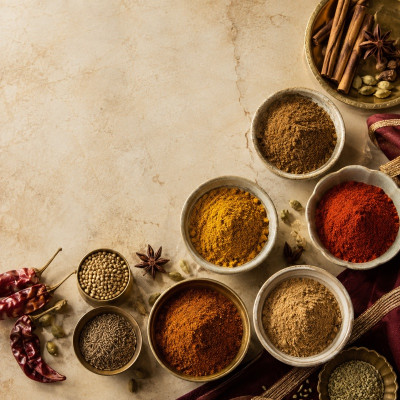
MasalaShala — Homemade Masala Making Business Course
Make six authentic homemade masalas — Rajma, Pav Bhaji, Sambar, Kadhai Paneer, Paratha and Kesar Milk — with exact…
Rahul Gupta
Rahul built the platform after watching his sisters answer the same WhatsApp question a hundred times. He writes the pricing, selling, marketplace, legal and planning pieces — the parts of a home business that are not about the product.
0 comments
Log in to ask a question or share what happened when you tried this.