The summer I started, I sold six jars of wet ubtan paste, mixed with rose water the way my mother made it, to women in my building. On the fifth day one of them sent me a photo of grey spots spreading across the surface. I refunded all six, and my herbal face pack business has not sold a wet pack since.
The short version
- Sell dry powder. A wet ubtan spoils in three to five days; a dry pack keeps six to twelve months.
- A 100 g jar of de-tan pack costs ₹45–₹60 to make and sells at ₹199–₹299.
- Start with three packs: a basic ubtan, a de-tan pack and one for oily skin. Not twelve.
- Salons buy ubtan by the kilo at ₹450–₹650. It is the steadiest order you will get.
- No "cures acne" on the label. "For oily skin" is a cosmetic. "Cures" is a drug.
Every woman in north India has a face pack recipe from her mother, and most of them are good. The difference between that recipe and a herbal face pack business is not the recipe. It is that a customer opens the jar four months later in a humid bathroom and expects it to be exactly what she paid for.
That is a formulation problem, a packaging problem and a costing problem before it is ever a selling problem. I have made face packs for our own label and for two parlours in Faridabad for years now, and this is the order I would do it in if I were starting again with ₹2,000.
Why this productThe herbal face pack business is a powder business
A face pack, done right, has no water in it. That one fact removes almost everything that makes skincare hard. No preservative system to get right, no emulsifier, no pH meter, no stability testing, no bottle that has to survive being squeezed. You are blending dry powders in the right proportions, sieving them fine, and keeping them dry until they reach the customer.
It is also the cheapest skill in our whole range to start. ₹1,500 of powders makes a first batch of ten jars, and the same powders, in different proportions, make a de-tan pack, an ubtan, a pack for oily skin and a scrub.
Your customer already uses this product. She has ubtan at every wedding in her family. You are not teaching her anything. You are saving her the grinding.
The ruleDry, not wet: what spoils and when
Mould needs water. Rose water, milk, curd, aloe gel, honey, fruit pulp: the moment any of these goes into the jar, you have made a product with a shelf life measured in days. In a fridge, three to five. On a bathroom shelf in July, less. A wet pack can be preserved, but that means a broad-spectrum preservative, a pH check and a stability test, and at that point you are running a small factory, not a kitchen.
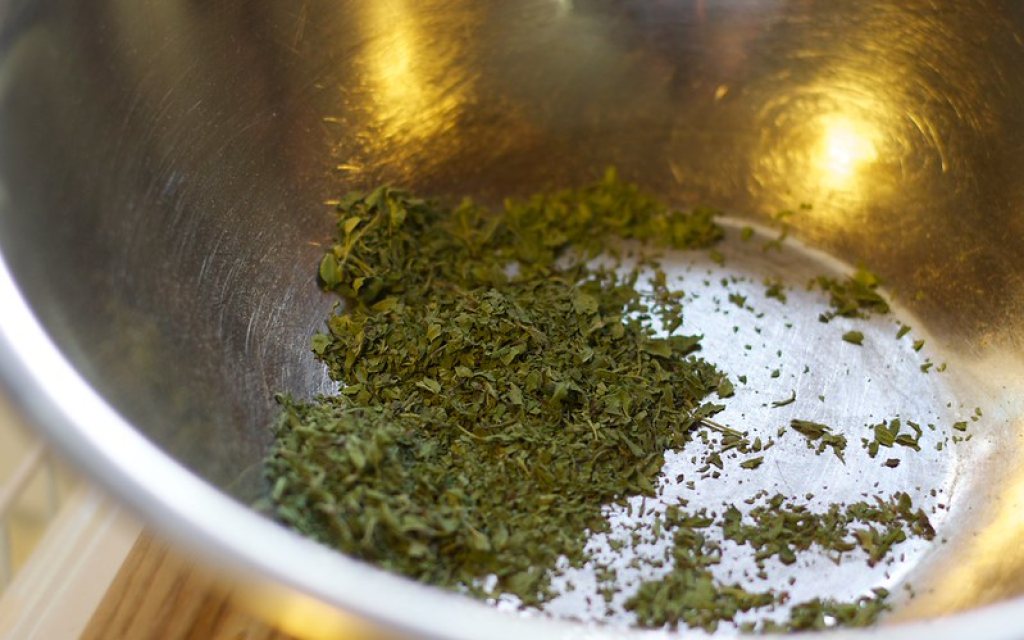
A dry pack, sun-dried and sieved and sealed, keeps six to twelve months as long as the customer keeps water out of it. So you sell the powder, and she mixes one spoon with rose water or milk on Sunday evening, exactly the way her mother did. Shelf life of handmade products sets out the whole logic; for this product the short version is that fresh papaya is a wet pack and papaya powder is a dry one, and only one of them belongs in a jar you are selling.
Honey does not spoil on its own, but honey mixed into powder pulls in moisture and turns the whole jar into a damp cake within weeks. Keep every liquid, however natural, on the customer's side of the sale.
IngredientsWhat goes in and what it costs
Eight powders cover almost every pack I make. All of them are in Khari Baoli in Delhi and in the ayurvedic pansari of any district town, and most are in the GyaanShala store. Buy 500 g of each to begin. The wholesale price is for 5 kg and more; the difference is real, but a 5 kg sack of orange peel powder goes stale before a beginner uses it.
| Powder | Used for | 500 g retail | Per kg, wholesale |
|---|---|---|---|
| Multani mitti | Oil absorption, base for de-tan and oily-skin packs | ₹60–₹90 | ₹40–₹80 |
| Besan | Base for ubtan; from the kirana, not the pansari | ₹50–₹70 | ₹80–₹120 |
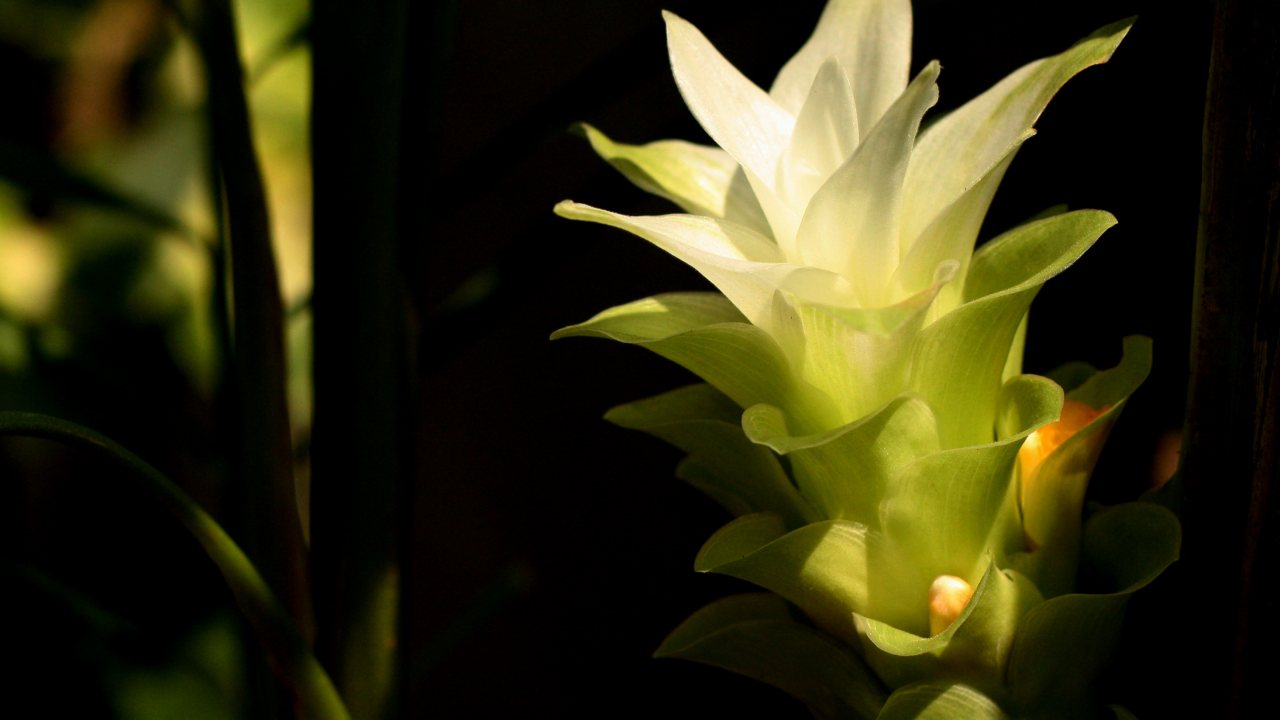
| Kasturi manjal (wild turmeric) | Glow without the stain of cooking haldi | ₹250–₹400 | ₹400–₹700 |
| Orange peel | De-tan, mild exfoliation | ₹120–₹200 | ₹200–₹350 |
| Rose petal | Fragrance and softness, every pack | ₹250–₹400 | ₹400–₹700 |
| Neem | Oily and acne-prone skin packs | ₹90–₹140 | ₹150–₹250 |
| Mulethi (licorice) | Brightening packs, used at five percent | ₹180–₹280 | ₹300–₹500 |
| Chandan | Ubtan and premium packs, five percent or less | ₹900–₹2,000 | ₹1,500–₹4,000 |
Two warnings on that table. Cooking haldi is not a substitute for kasturi manjal; it stains skin, towels and your reputation. And genuine chandan is expensive, which means any "chandan powder" at ₹300 a kg is mostly something else. Buy it from one supplier you trust, use it at five percent, and never let it be the ingredient a pack depends on. Where to buy raw materials covers how to check what you are paying for.
The batchOne kilo of de-tan pack, step by step
This is the pack I make most. The proportion is 400 g multani mitti, 200 g orange peel, 200 g besan, 100 g rose petal, 50 g mulethi and 50 g kasturi manjal, which is one kilo and ten 100 g jars.
- Dry every powder before you beginSpread each one on a steel tray in the sun for two hours, or in an oven at its lowest setting for twenty minutes. Powders pick up moisture sitting in a shop.
- Weigh on a 0.1 g scale and write it downBatch number, date, each weight. When a customer reorders in November you need to make the same thing.
- Sieve each powder through an 80-mesh sieveWhatever stays in the sieve is the grit that scratches. Discard it or grind it again. Do not skip this for besan.
- Mix in a dry steel bowl with a dry spoon for five minutesThen sieve the whole mix once more. Two sievings is the difference between homemade and bought.
- Patch-test on your own forearmOne teaspoon with water, fifteen minutes, rinse. You are checking for grit, stain and any tingling.
- Fill through a dry funnel, 100 g a jarPET or glass, wide-mouthed, with a lid that seals. Never paper or cardboard for a powder that must stay dry.
- Silica sachet under the lid, shrink band, labelThe label carries the batch number from step two and the month of manufacture.
- Keep one jar back as your controlOpen it at three months and six months. Smell it, rub it between your fingers. That jar tells you your real shelf life.
The numbersCosting and pricing a 100 g jar
Materials are the cheap part of a face pack. The jar, the label and your time are most of the cost, which is why a 50 g jar is not half the price of a 100 g one.
| Item | Per jar |
|---|---|
| Multani mitti, 40 g | ₹3 |
| Orange peel, 20 g | ₹6 |
| Besan, 20 g | ₹2 |
| Rose petal, 10 g | ₹6 |
| Mulethi and kasturi manjal, 5 g each | ₹5 |
| PET jar with lid, 100 g | ₹11 |
| Label, shrink band, silica sachet | ₹6 |
| Wastage, sieving loss, sun and gas | ₹3 |
| Your time, four minutes | ₹10 |
| Cost per jar | ₹52 |
On WhatsApp that jar sells at ₹199. In a kraft box with a wooden spoon for gifting, ₹249–₹299. To a parlour, loose in a 1 kg pouch, ₹450–₹650 a kilo, which is ₹45–₹65 per 100 g against a material cost of ₹22, so still worth doing. The method for choosing between those prices is in how to price handmade products; the mistake to avoid is pricing the WhatsApp jar off the salon price.
The recipe is your mother's. The business is the jar still being dry in month six. — the rule I sell by
SellingWhere a herbal face pack business finds its first customers
Your first customers are already asking you. They are the women who have watched you grind ubtan for a cousin's haldi and asked for the recipe. Give ten of them a 50 g jar and ask for a message after two uses. Those messages, with the sender's permission, are your first catalogue.
Wedding season is the order that changes the scale. A bride's family in Faridabad will take thirty to fifty 50 g jars of ubtan at ₹99–₹129 each as favours for the haldi ceremony, and they order three weeks ahead. October to February and April to June are the months. One such order is more than a month of WhatsApp sales, and it comes with fifty new people holding your label.
Salons are the steady base. A parlour uses 100–150 g of ubtan per bridal package and 30–50 g per facial, buys a kilo at a time, and does not want a pretty jar. It wants the same grain and the same smell every month. Meenu's piece on selling to salons is how to open that door. My one addition: take a small bowl, a spoon and a bottle of water to the first meeting and let the owner feel it on the back of her hand.
Not faces. Before-and-after photos are a claim you cannot make on a cosmetic. Photograph the jar, the spoon, the powder on a white plate and the paste on the back of a hand. Rahul's phone photography guide covers the light and the background.
Where it goes wrongHaldi stains, weevils and the claims you cannot make
Cooking haldi. The single most common complaint about a homemade pack is a yellow face and a yellow towel. Kasturi manjal, the wild turmeric, gives the glow without the stain. If you cannot get it, leave turmeric out.
Weevils in the besan. Chana flour is food, and in a Faridabad monsoon it will grow weevils inside a sealed jar within six weeks if any were in it to begin with. Freeze the besan for forty-eight hours before you mix, dry it in the sun, and make smaller batches from July to September.
Grinding at home. A mixer-grinder heats the powder, changes the smell of rose and orange, and throws fine dust everywhere. Buy powders already ground and put your effort into sieving them.
The label. "Removes pigmentation", "cures acne", "fairness in seven days": each of those turns your cosmetic into a drug in the regulator's eyes, and as of 2026 that is a different licence entirely. Say "for oily skin", "de-tan pack", "brightening ubtan". The full list of what a label must and must not carry is in how to label handmade cosmetics in India; verify the current rules on the CDSCO portal before you print.
Twelve varieties on day one. Three packs, three jars each on the table. A customer choosing between twelve buys none.
What nextFrom one pack to seventeen
Once the de-tan pack and the ubtan are selling, the range is what keeps a customer with you: a pack for her mother's dry skin, a charcoal pack for her husband, a kumkumadi pack at a premium for the wedding month. The FacePack Shala course is that range as I make it. Nine packs are filmed start to finish, from the basic ubtan through de-tan, kumkumadi, anti-acne, charcoal and beetroot; the recipe library has all seventeen formulations, including three ubtans and a scrub; and the later modules cover matching a pack to a skin type, shelf life and moisture, the exact costing formula and your first ten orders.
The natural second product is a dry face wash powder: the same powders, ground finer, sold as a daily cleanser. Same jar, same customer, twice the order.
This week, make one kilo of the de-tan pack. Sieve it twice. Keep a jar back. Sell the other nine.
Still unsureQuestions we get asked
How much does it cost to start a herbal face pack business from home?
How long does a homemade herbal face pack last?
Can I sell ubtan to salons and parlours?
Do I need a licence to sell herbal face packs in India?
Which face pack should I make first?
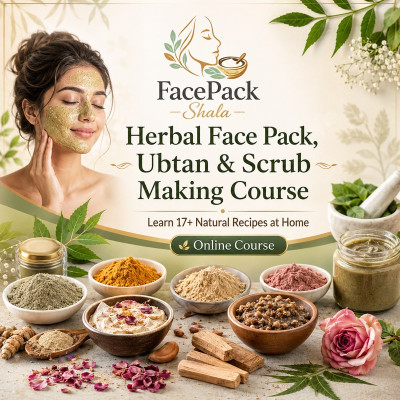
FacePack Shala — Herbal Face Pack, Ubtan & Scrub Making Course
Learn to make herbal face packs, ubtan and scrubs at home and build a natural skincare business.
Anju Mittal
Anju formulates the soap, shampoo, hair oil, face pack, perfume and bath-salt recipes GyaanShala teaches — and sold every one of them from home first, spoiled batches included. She writes the pieces about what goes in the jar, what keeps, and what a salon actually orders.
0 comments
Log in to ask a question or share what happened when you tried this.