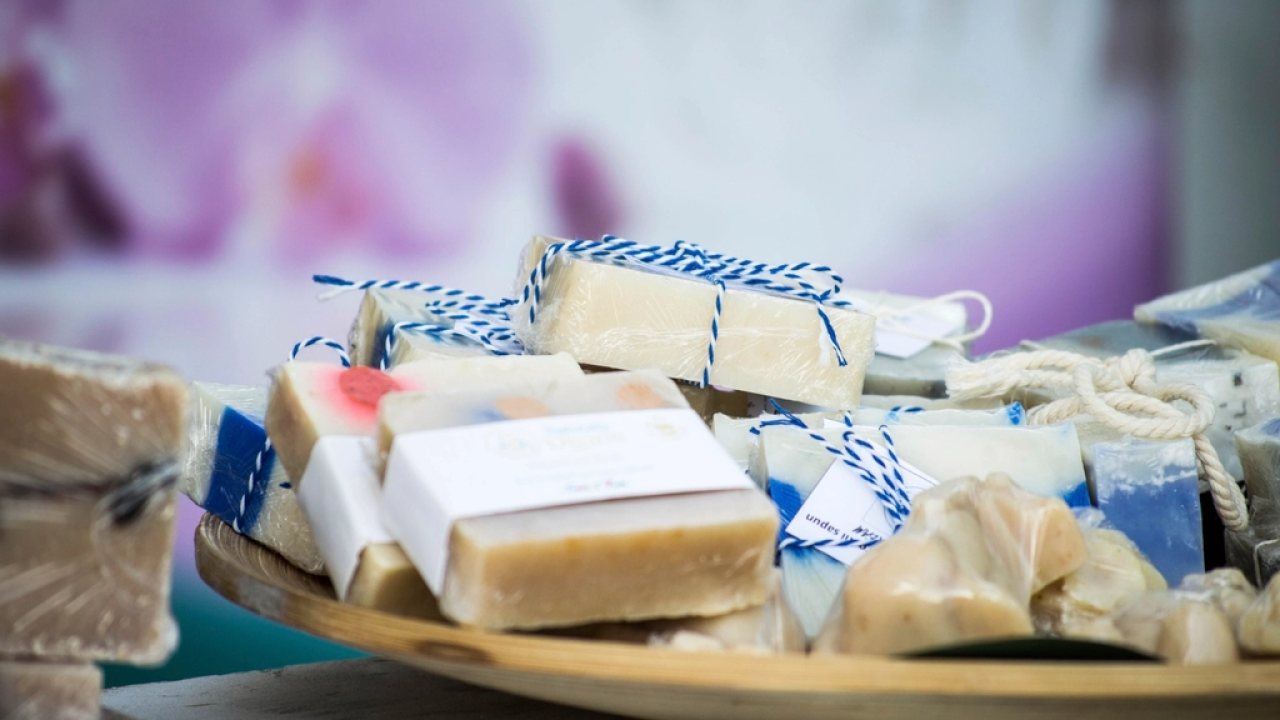
The first thirty bars of my handmade soap business were haldi-chandan, wrapped in butter paper and priced at ₹60, because I was afraid nobody in Faridabad would pay more for a soap. When I finally counted the wrapper, the label and the base I had wasted, the bar had cost me ₹64. I lost money on every one and thought I was doing well.
The short version
- Start with melt and pour. No lye, no six-week cure, a bar you can sell tomorrow.
- A first batch of thirty bars costs ₹2,500–₹3,500 including moulds and a scale. You do not need ₹15,000.
- A 100 g bar costs ₹65–₹85 to make and sells at ₹120–₹180. Under ₹100 you are working for free.
- Soap is a cosmetic, not food. No FSSAI. Labelling and state cosmetic rules do apply.
- The first hundred bars sell on WhatsApp and at one exhibition table. Amazon comes much later.
Soap is the product I am asked about more than any other we teach, and the question is nearly always the same. Can it really be done from a kitchen, with no factory, no chemistry degree and no more than a few thousand rupees to risk? It can. I have made every bar I sell on the same gas stove I cook on.
What is not true is the version you see on YouTube, where a woman melts a block, pours it into a heart mould and is running a brand by the end of the video. The making is the easy part. The parts that decide if you are still doing this in a year are the costing, the wrapping and the first fifty conversations. This guide is about those.
Why soap firstThe handmade soap business that fits in a kitchen
I tell beginners to start with soap ahead of shampoo, face packs and everything else, for three reasons. It does not spoil: a melt-and-pour bar has no water in it to go off and keeps a year in a dry cupboard. It is forgiving: a bar that comes out ugly is remelted, not thrown away.
And customers already understand it. Nobody has to be taught what a soap is for. They only have to be persuaded that yours is better than the ₹40 one from the kirana.
That persuasion has become easier. The women who stop at my table at exhibitions read the ingredient list now. They ask "isme kya daala hai" before they ask the price. A bar that says multani mitti, coconut oil and nothing they cannot pronounce is a bar they will pay ₹150 for.
The methodMelt and pour, then cold process later
There are two ways to make soap at home, and the choice decides your first three months.
Melt and pour: start here
You buy a ready soap base. A 1 kg block of glycerine, goat-milk or shea base costs ₹380–₹450 in Delhi's Sadar Bazaar and ₹450–₹550 online in small quantities. You cut it, melt it over a pan of hot water, stir in a herb powder and a fragrance, and pour it into a mould. It sets in an hour, unmoulds in four and can be wrapped the same evening. No caustic soda in the house, no goggles, no waiting.
Cold process: later, if at all
Cold process means combining oils with lye so the reaction makes soap from scratch. The bar is beautiful and you control every gram, but lye burns, the recipe has to be weighed to the gram, and the finished bar must cure for four to six weeks before it is hard and mild enough to sell. Every rupee you spend on oil sits on a rack for a month and a half before it can come back. I moved to cold process for one premium bar only, and only after the melt-and-pour range was paying for itself. Most makers I know never move at all, and their customers do not mind.
Cold process needs a scale, ventilation, gloves, eye protection and a lye calculator. In a small flat with children about, stay with melt and pour. It is not a lesser soap. It is a different one.
What you needA first batch for under ₹3,500
Everything on this list fits in one trip to Sadar Bazaar or one online order. Buy for thirty bars, not three hundred. The single most common mistake I see is a beginner who has spent ₹9,000 on moulds and colours before she has sold a bar.
| Item | Cost |
|---|---|
| Melt-and-pour base, 3 kg | ₹1,200–₹1,400 |
| Silicone mould, six-cavity rectangle, two of them | ₹300–₹500 |
| Herb powders: multani mitti, haldi, activated charcoal, 100 g each | ₹250–₹350 |
| Fragrance oil, 30 ml | ₹150–₹300 |
| Digital scale, 0.1 g accuracy | ₹300–₹450 |
| Shrink wrap or cling film for thirty bars | ₹60–₹100 |
| Thirty printed labels | ₹90–₹150 |
| First batch, all in | ₹2,350–₹3,250 |
You already own the steel bowl, the pan and the knife. Do not buy a craft-shop "soap kit" at ₹2,000 that holds 500 g of base and a plastic mould. If you would rather have it arrive as one parcel, the starter raw material kit in our store is measured for exactly these batches, and the fragrance oil set covers six bars' worth of scents. Where to buy raw materials tells you which market stall to stand at if you are buying it yourself.
The first batchThirty bars, step by step
- Weigh the base, do not guess it100 g of base for a 100 g cavity, plus five percent for what stays on the bowl. Cut it into 2 cm cubes so it melts evenly.
- Melt low and slowA bowl over a pan of hot water, never a rolling boil. Overheated base turns rubbery and cloudy, and there is no bringing it back.
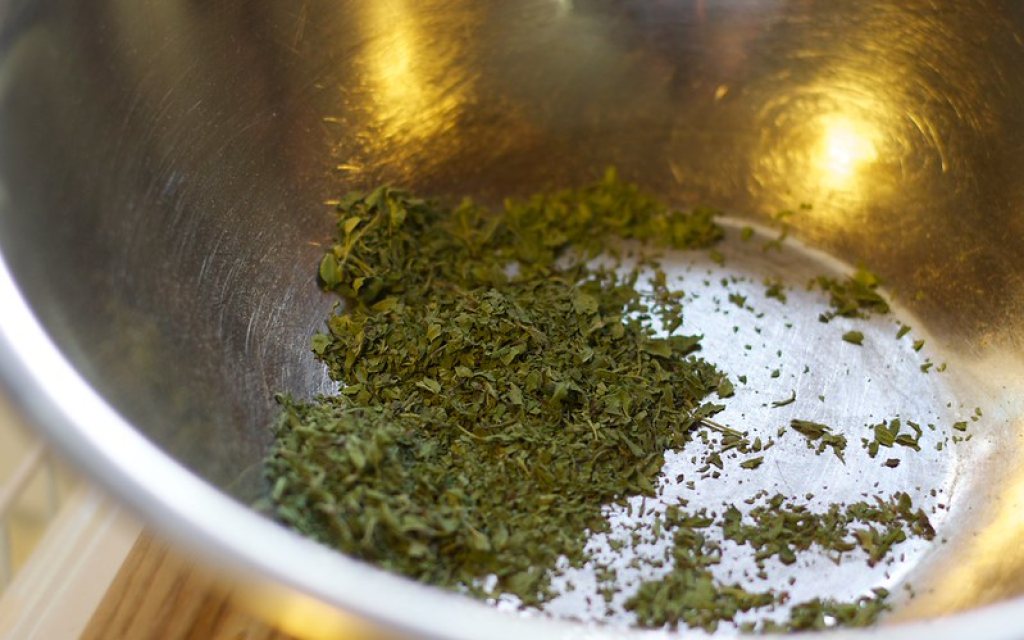
- Add the powder off the heatOne level teaspoon, about 3 g, per 100 g of base. Stir until there is not a single lump. A lump of haldi is a bar that stains a towel.
- Fragrance last, at about 55 degrees1–2 ml per 100 g. More than that and the bar sweats oil on its surface for a week.
- Pour in one motion, then spritzFill each cavity without stopping. A spray of rubbing alcohol from a ₹40 chemist bottle kills the surface bubbles.
- Wait four hours before you touch itUnmould early and the corners tear. Push from the bottom of the mould, never pull the bar.
- Wrap the same dayGlycerine pulls moisture from the air. An unwrapped bar in August is wet by morning.
- Label it and write it downDate, batch number, what went in, what it cost. The notebook matters more than the bars.
The numbersWhat one bar costs and what it sells for
This is the table I wish somebody had shown me before the ₹60 bars. Materials are the smallest part of it.
| Item | Per bar |
|---|---|
| Soap base, 100 g at ₹420 a kg | ₹42 |
| Haldi and chandan powder, 3 g | ₹4 |
| Fragrance oil, 1.5 ml | ₹6 |
| Shrink wrap and label | ₹6 |
| Kraft box | ₹10 |
| Wastage, gas, alcohol spray | ₹5 |
| Your time, four minutes | ₹10 |
| Cost per bar | ₹83 |
Drop the box and it is ₹73. At an exhibition, a wrapped bar goes at ₹120. On WhatsApp, boxed, ₹150–₹180. To a gift shop or a hamper maker who takes fifty at a time, ₹90–₹100. All three prices can be right on the same day for the same bar, and the full method for deciding which is which is in how to price handmade products.
A bar priced at ₹60 is not a cheap soap. It is a maker who has not counted. — what I understood after the first thirty
Where it goes wrongSweating, overheating and the fresh-ingredient trap
Three failures account for most of the bars I have thrown away. None is a recipe problem.
Sweating. Glycerine is a humectant. In a Faridabad monsoon, an unwrapped bar is covered in droplets by morning, the label lifts and the customer thinks it is melting. Butter paper alone does not stop this. Shrink film or cling film does, plus a closed storage box with a silica gel sachet.
Overheating. Base that has boiled goes lumpy, cloudy and rubbery and never pours cleanly again. If you must use a microwave, twenty-second bursts with stirring in between. The pan of hot water is slower and it has never ruined a batch for me.
Fresh ingredients. Fresh aloe gel, milk, cucumber pulp, fruit. A bar with fresh aloe in it looks wonderful in a photo and grows black spots in three weeks, because you have added water and food for mould to a product with no preservative. Use dried powders, or a base that already contains the ingredient, such as a goat-milk base. Shelf life of handmade products goes through what keeps and what does not, product by product.
If your charcoal is a black stripe at the base of the bar, you poured too hot. Let the melted base thicken slightly, to about 55 degrees, stir the powder in again and then pour. It stays suspended.
The rulesSoap is a cosmetic, not food
Handmade soap is a cosmetic, so FSSAI has nothing to do with it. What does apply, as of 2026, and please verify each of these on the official portal before you print a label:
- State cosmetic licensing. The manufacture of cosmetics for sale is regulated under the Cosmetics Rules, 2020, through the state drug licensing authority. How that is applied to a kitchen maker varies from state to state. Ask your state drugs control office directly. The national framework is on the CDSCO portal.
- Udyam registration. Free, online, ten minutes, on udyamregistration.gov.in. It gives you an MSME number that banks, exhibitions and marketplaces ask for. Do it in week one.
- GST. For goods, registration becomes compulsory above a turnover threshold that was ₹40 lakh in most states when I last checked, and lower in the north-eastern and hill states. Selling on Amazon or Flipkart requires a GSTIN regardless of turnover. Confirm the current figure on gst.gov.in.
- Labels. Product name, net weight, ingredient list, your name and address, batch number, month of manufacture. And no medical claims: a soap that "cures acne" is a drug in the regulator's eyes, a soap "for oily skin" is a cosmetic. The full list is in how to label handmade cosmetics in India.
SellingWhere a handmade soap business sells its first hundred bars
The first ten bars are not sold. They are given, and not to friends, who will be kind, but to the three people in your building who talk. Ask each of them for a photo after a week of use. Those photos are your first catalogue.
The next forty go on WhatsApp. One bar per status, one line of what is in it, one price. No collage of nine soaps, no "DM for price". Rahul has written out the whole method in how to sell handmade products on WhatsApp and Instagram, and it is the one I still follow.
The fifty after that go across a table. A Sunday stall at a society mela or a school fete in Faridabad costs ₹500–₹1,500. Carry sixty bars, a cut bar for people to smell, and a small basin of water so they can lather a corner. Take four kinds, not fourteen: charcoal, haldi-chandan, neem-tulsi and one mild bar for children. Every extra variety on the table is a decision you are asking a stranger to make.
Gift shops, boutiques and hamper makers come next, at wholesale, twenty to fifty bars at a time, and they will only take a bar that looks bought rather than homemade. Meenu's packaging piece is the standard they judge by. Amazon and Flipkart come last, once you have a GSTIN and a bar that can survive a courier van in May.
What nextTen recipes, then a range
One bar proves you can make soap. A range of eight to ten is what turns a hobby into a business, because a customer who liked the charcoal bar will try the coffee scrub, and a hamper maker wants four colours in a box. The SoapShala course is the range I built, module by module: the seven universal melt-and-pour steps, then charcoal, haldi-chandan, neem-tulsi, the natural oil soaps, multani mitti, aloe vera, daily ubtan, the de-tan coffee scrub, kesar, an anti-pigmentation bar and a gentle baby soap, with a module on where to buy in India and a starter kit for selling on Amazon.
Make thirty bars this week. Write down every rupee and every minute. Price them at what the table says, not at what you fear. Then do it again.
Still unsureQuestions we get asked
How much does it cost to start a handmade soap business from home in India?
Is a licence required to sell handmade soap in India?
Melt and pour or cold process: which is better for a beginner?
How much profit is there in one handmade soap bar?
Why is my handmade soap sweating and how do I stop it?

SoapShala — Home Soap Business Course
Learn professional handmade soap making at home — 17 modules, HD videos — then price, package & sell on WhatsApp…
Anju Mittal
Anju formulates the soap, shampoo, hair oil, face pack, perfume and bath-salt recipes GyaanShala teaches — and sold every one of them from home first, spoiled batches included. She writes the pieces about what goes in the jar, what keeps, and what a salon actually orders.
0 comments
Log in to ask a question or share what happened when you tried this.